

Delivering our returns transformation
Want the whole story behind the launch? Join Grant Humm and Filipa Pereira on The Delivery Podcast for all the details on transforming our returns.
by Filipa Pereira, Senior Principal Product Manager, Grant Humm, Customer Care Team Lead
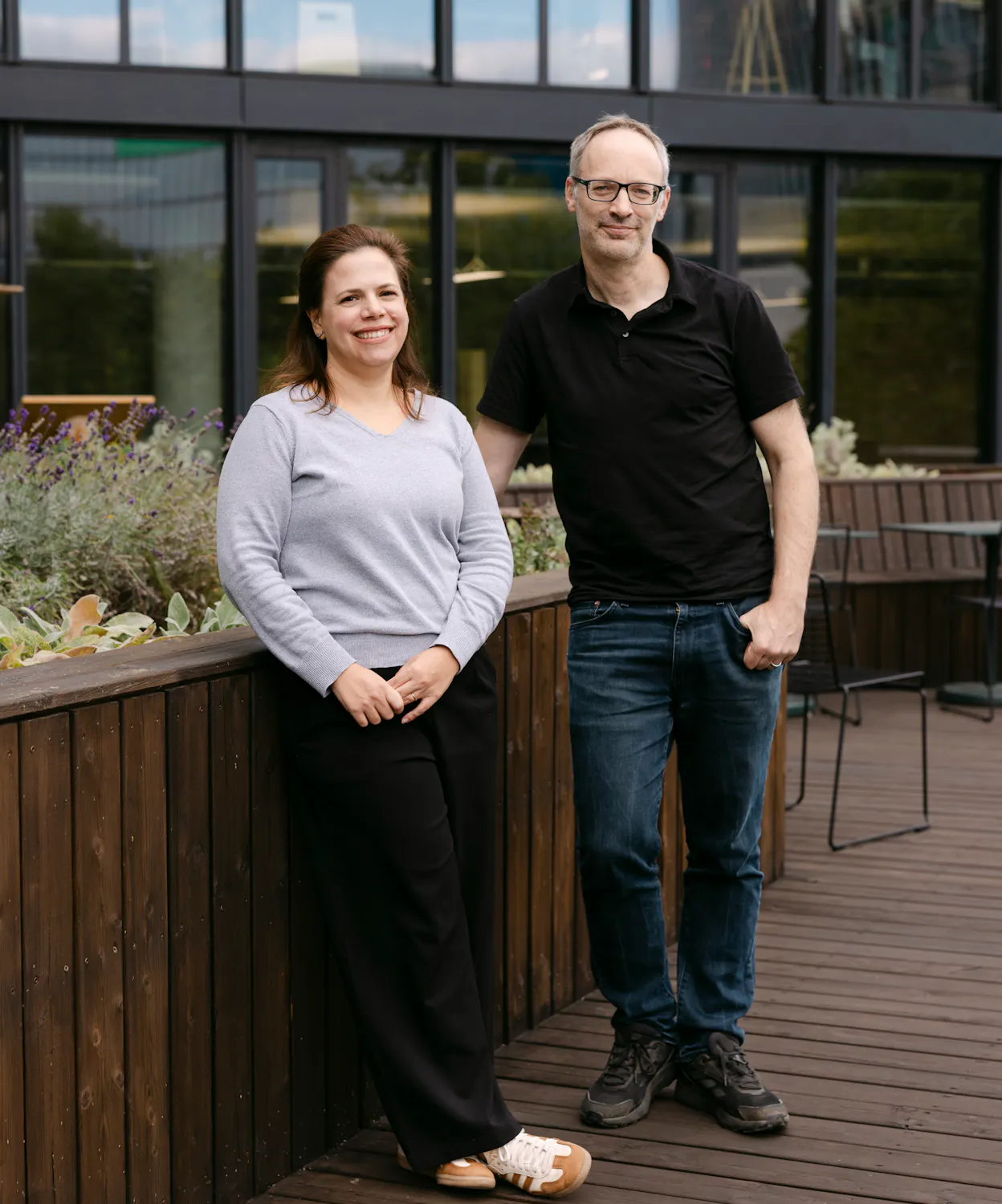
In this episode of The Delivery Podcast, host Grant, Customer Care Team Lead sits down with Filipa, Senior Principal Product Manager in Transactions, to discuss the ongoing returns transformation. They explore the shift from paper return slips to a digital-first post-purchase journey, sharing the challenges, market differences, and biggest lessons learned along the way.
Want the whole story behind the returns transformation? Join Grant and Filipa on this episode for all the details on digitising the post-purchase experience. Listen to the full episode here.
Would you like to give us an overview of what returns transformation means?
"This is part of a bigger strategy that we started in 2024. It's part of a broader vision that we want to improve the post-purchase experience, to reconnect with our customers at the moment after the order. Before that it was too transactional, and we want to change that. So it starts to bring customers back online after their order, and that's the biggest transformation."
Why did we need to remove the delivery slip from the parcels, and how does that connect to bringing the customer back online?
"There was this issue that we were facing: when customers are returning their items, they're just using this paper to send the items back, and we didn't have any connection again with the customers. Our thought is that if we remove the paper, they will have to go back online to announce their return, and then there is an opportunity for us to connect again with them."
How did you prepare the customer for this large change?
"We knew that we were asking them to change their habits, so we wanted to reduce this friction and to give them the best customer experience ever. We did experimentation in almost every market where we saw there were more risks—for example, in Germany we tested for more than 15 months."
Did you notice any differences within the countries?
"We saw a lot of differences market by market, and this was really a rollout market by market and adjusting the customer experience to each market's specifics. In Germany, customers adjusted, actually. They followed the instructions. In other markets, it was more difficult. For example, in Austria, we saw there was more resistance... This is also a cultural difference."
What were the kind of blockers or problems that you faced in the project and in running the transformation?
"I think the main difficulty is that we were touching a very sensitive customer experience part. We saw this was impacting the customer care contacts, with an increase up to 70% for return-related contacts when we were launching in any market. We also saw an impact on NPS more recently. We saw that there was some dissatisfaction because customers are adjusting to this process."
What would be your largest lesson from this big change?
"Now, knowing everything that we learned during this process, I think we would have done this differently. We would firstly launch the new benefits, so when customers then have this challenge to come back online, at least they will see what are the benefits of doing that quite immediately. For example, having instant refunds would have been a great link for them."
Episode Transcript
Grant: Welcome to the Delivery podcast. My name is Grant, I work within Customer Care here at Zalando, and with me is Filipa.
Filipa: Hello, I'm Filipa, I work as Senior Principal Product Manager in Transactions, and I'm responsible for the post-purchase experience.
Grant: Let's talk about how we know each other, Filipa. Maybe you can introduce what we're going to be talking about.
Filipa: We met the moment I joined Zalando two years ago. Post-purchase and Customer Care have a lot of connection between the two areas, and since day one I've been working on this project that is returns transformation.
Grant: Would you like to give us an overview of what returns transformation means? I'm always a bit curious when there's the word transformation in a title.
Filipa: This is part of a bigger strategy that we started in 2024. It's a broader vision to improve the post-purchase experience and reconnect with our customers after the order. Before, it was too transactional, and we want it to be more engaging and meaningful. The biggest transformation is bringing customers back online after their order. That started with the delivery slip removal, but it encompasses much more than just that.
Grant: As the voice of the customer, we were looking at how this impacted customers and the questions they had. Customers are used to having a slip in their parcels to send items back. Why did we need to remove it, and how does that connect to bringing the customer back online?
Filipa: The issue was that customers were just using this paper to send items back, and we didn't have any connection with them. Our thought was that if we remove the paper, they have to go back online to announce their return. Then there is an opportunity to connect with them, understand their motivation, find out why they are returning, and try to fix that.
It's an opportunity to re-engage with them, offer more content, and encompass our broader strategy. Before, they opened the box, sent it back, and received an email saying, "Here's your refund." Now, we have an opportunity to learn more from them and bring them benefits. For example, if we know an item doesn't fit, we can adjust size recommendations for their next purchase based on that feedback.
Grant: So we can use the data we're capturing with this new process to improve their customer experience in the long run.
Filipa: Exactly. And we can also offer other features that are only possible if they go back online, like immediate reimbursement, which we are launching in some markets. That's only available if they go back online; otherwise, they get the normal refund that takes more time.
Grant: It was quite a large change for the customer. They've been used to more than 10 years of having a return slip. How did you prepare the customer for this large change?
Filipa: It is a very big change, and we were always concerned about how to protect the customer experience and make it as easy as possible to migrate to the new digital process. Our main focus was to understand their pain points. We knew we were asking them to change their habits—going back online, finding out the new return methods, getting a QR code, possibly going to a different location. We wanted to reduce this friction.
We did experimentation in almost every market where we saw risks. In Germany, we tested for more than 15 months to measure customer pain points and long-term impacts. Through customer contacts, we learned about those pain points and created features to address them. For example, customers were telling us they had to go to a different location because they mistakenly selected the wrong carrier. Listening to this feedback, we created a feature enabling them to cancel the return and announce it again with the correct carrier.
Grant: How did you capture the voice of the customer around this process change?
Filipa: We worked very closely with the customer care team and monitored KPIs, mainly the customer contact rate. Whenever we launched an experiment or rolled out in a market, we saw an increase in contacts. Most were about, "I want my paper back." We also used a tool called CaseCruncher that enables us to look into a date range, get into the contact details, analyze return contacts, and group them into different categories.
Grant: CaseCruncher is an LLM that looks through huge amounts of contacts within a very short period of time. Previously, specialists read through contacts and categorized them, but CaseCruncher makes it much easier to pull together patterns. Did you notice any differences within the countries?
Filipa: Yes, this was one of the most rewarding learnings. Initially, we thought there would be a common pain point across all markets because everyone was used to the paper. But we saw a lot of differences market by market. The carriers are super different and offer different experiences—sometimes it's a QR code, sometimes you have to write down a code, or go to specific locations.
We learned we needed to be very specific and explain to the customer what they have to do, while understanding how it affected them differently. In Germany, customers adjusted and followed the instructions. In other markets, like Austria, we saw more resistance. Customers really wanted their paper back. It was super interesting to learn how this is also a cultural difference, and how customers adjust differently along the way.
Grant: What were the kind of blockers or problems that you faced in running the transformation?
Filipa: We were touching a very sensitive customer experience part. We know customers love Zalando for how easy it is to make a return. We saw this impacting customer care contacts, with an increase up to 70% for return-related contacts during a launch.
Grant: Ouch.
Filipa: We had to coordinate very clearly and be prepared for this impact. We also saw an impact on NPS more recently due to some dissatisfaction as customers adjusted. We anticipated this and tried to mitigate it with experience improvements, but it took much more time than we initially thought because customers need time to adjust. We didn't want to do a big bang and have a very bad impact on our metrics.
Grant: What would be your largest lesson from this big change?
Filipa: Taking longer than expected and having to step back to launch improvements was one lesson. But if it was now, I would do things differently. We initially thought, "Let's bring them online and then start shipping all the new benefits." It was not that easy.
Now, knowing everything we learned, I think we would firstly launch the new benefits. When customers have this challenge to come back online, at least they see the benefits immediately. Better size recommendations aren't immediately visible to the customer. But having instant refunds already available would have been a great link for them, providing an immediate benefit for that additional effort.
Grant: We have around 14 countries that are now actually below 2025 and even 2024 contact rates. Germany and Austria are still a bit above, but getting there, right?
Filipa: Yes. This was a very successful program in the end, because now 90% of customers are announcing returns online. We launched across 19 markets, with only seven pending. We are collecting more data than before—we went from collecting return reasons for 70% of our customers to 93%. And right now, we are below the contact values we had before the launch. We are seeing that the experience is actually easier for customers once they go online.
Grant: Fantastic. What's next after such a huge transformation?
Filipa: We still have to continue the transformation. The delivery slip was just the beginning; now we are starting to deliver the benefits. Next year's focus is to help customers exchange their items once they go back online.
Grant: Really?
Filipa: It will be an easier experience for them. We are also planning to launch the instant refunds option. Now is the moment to start delivering those benefits.
Grant: I'm looking forward to the exchange option. I definitely see a lot of customers asking when it's going to happen.
Filipa: We started this year with size exchanges—if you select a size-related return reason, you get a recommendation of the same item in a different size to add to your cart. It was super successful. Next year, we plan to continue this and ultimately deliver the next exchange experience.